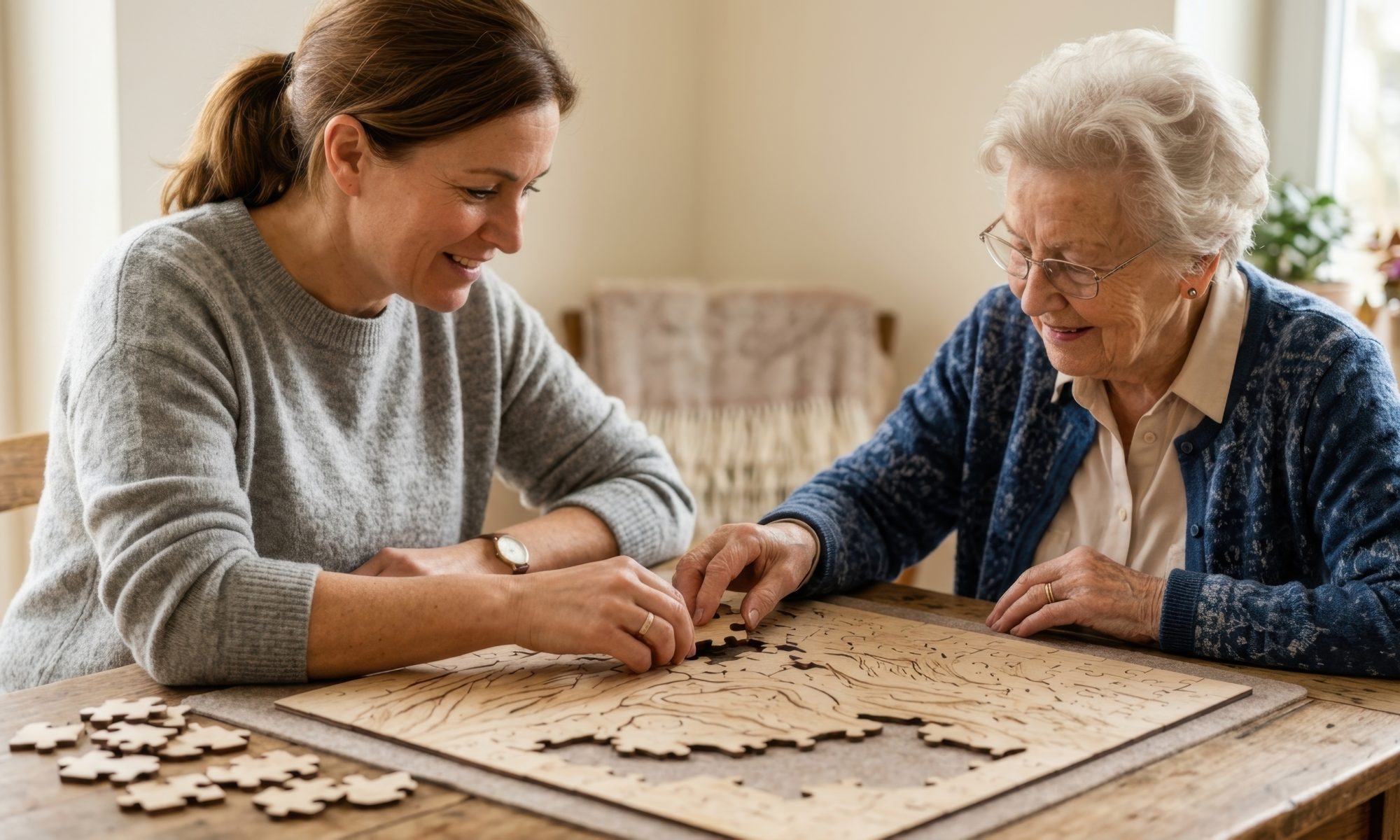
In-home dementia care is one of the most effective ways to support cognitive health in seniors with dementia. Familiar surroundings reduce anxiety and confusion, creating the ideal environment for meaningful mental engagement. With the right strategies, caregivers can make a measurable difference in their senior loved ones’ quality of life every single day.
How Does a Daily Routine Keep Dementia Patients Mentally Engaged?
A consistent daily routine gives a senior with dementia a sense of structure and predictability, which reduces stress and supports cognitive function.
- Schedule activities at the same time each day to reinforce memory and reduce disorientation.
- Alternate between mentally stimulating tasks and restful periods to avoid fatigue.
- Use visual schedules or memory boards to help your loved one follow along independently.
The cognitive decline that accompanies dementia can make it difficult for seniors to manage everyday tasks on their own. Certain age-related conditions can make it more challenging for seniors in east-central Virginia to age in place safely and comfortably, but top-rated Richmond 24-hour home care experts are available around the clock to help seniors manage their health. Whether your loved one is living with dementia or recovering from a stroke, you can trust the professional 24-hour caregivers from Home Care Assistance to enhance his or her quality of life.
What Types of Activities Best Stimulate the Minds of Seniors with Dementia?
Purposeful, enjoyable activities that draw on long-term memory and familiar skills tend to work best for seniors with dementia.
- Creative activities – Drawing, painting, knitting, or simple crafts engage focus and fine motor skills.
- Music – Listening to or singing familiar songs from your loved one’s past can trigger positive memories and boost mood.
- Puzzles and games – Simple jigsaw puzzles, card games, or matching games provide gentle cognitive challenges.
- Reminiscence activities – Looking through old photos or discussing past experiences stimulates long-term memory recall.
How Does Social Interaction Support Cognitive Health in Seniors with Dementia?
Regular social interaction reduces feelings of isolation and keeps the brain engaged through conversation and shared experience.
- One-on-one time with a caregiver, family member, or friend provides meaningful connection.
- Video calls with loved ones maintain relationships when in-person visits aren’t possible.
- Simple activities done together, such as cooking, gardening, or reading aloud, combine social engagement with mental stimulation.
Can Physical Activity Keep the Mind Active?
Yes. Regular physical movement has been shown to support brain health by increasing blood flow and reducing agitation in seniors with dementia.
- Gentle exercises like chair stretching, light walks, and dancing to familiar music are safe and effective.
- Outdoor activities like tending a small garden offer both physical and sensory stimulation.
- Even short bursts of movement throughout the day can have a positive effect on mood and alertness.
Seniors with dementia often need assistance with everyday activities so they can age in place in safety and comfort. If your senior loved one has been diagnosed with a serious condition and needs help with tasks like meal prep, transportation, bathing, and grooming, reach out to Home Care Assistance, a leading provider of home care Richmond families can trust. We also offer comprehensive care for seniors with dementia, Alzheimer’s, and Parkinson’s.
How Do Sensory Experiences Benefit Seniors Receiving In-Home Dementia Care?
Sensory stimulation engages multiple areas of the brain at once, making it a powerful tool for keeping senior minds active.
- Aromatherapy using familiar scents like baked goods or flowers can evoke positive memories and calm anxiety.
- Textured objects, soft fabrics, and tactile activities like sorting items provide gentle sensory engagement.
- Nature sounds, birdsong, and calming music create a soothing environment that supports focus and emotional wellbeing.
Even when families have the best intentions, caring for a senior loved one with dementia can be challenging. Fortunately, Home Care Assistance is here to help. We’re a leading provider of dementia home care that offers Richmond families much-needed peace of mind. Families can take advantage of our flexible and customizable care plans, and our caregivers always stay up to date on the latest developments in senior care. Schedule a free in-home consultation by giving us a call today.
Frequently Asked Questions
How many hours a day should a dementia patient engage in stimulating activities?
+
Most experts recommend two to four hours of structured activity spread throughout the day, balanced with adequate rest periods to prevent overstimulation.
What are the best activities for seniors with late-stage dementia?
+
In later stages, simpler sensory activities—such as listening to music, gentle hand massage, or looking at familiar photos—work best, since these require less cognitive effort.
How can caregivers adapt activities as dementia progresses?
+
Caregivers should simplify tasks over time, focusing on activities that match the senior’s current abilities and bring comfort rather than frustration.
Does in-home dementia care enhance outcomes compared to facility-based care?
+
Many seniors with dementia benefit from staying at home because familiar environments reduce confusion and agitation, which can support better overall engagement and emotional stability.
How can family members support a loved one’s cognitive activity between caregiver visits?
+
Family members can leave out easy-to-use items like photo albums, simple puzzles, or a playlist of favorite songs, giving their loved one opportunities for self-directed engagement throughout the day.