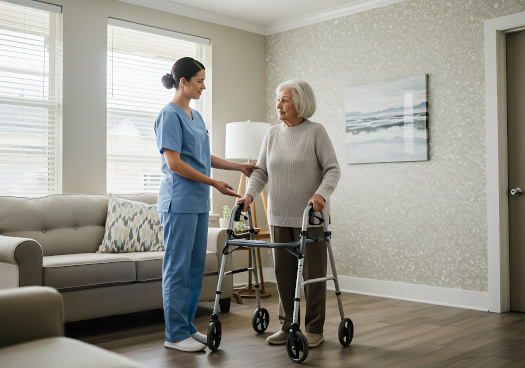
In-home care helps seniors with mobility issues stay safe, independent, and comfortable at home by providing fall prevention assistance, help with daily activities like bathing and dressing, meal preparation support, reliable transportation, and reinforcement of physical therapy routines.
Mobility challenges can turn a beloved home into a landscape of obstacles, threatening a senior’s safety and confidence. In-home care provides a vital bridge, offering personalized support that allows aging adults to navigate their environments securely while remaining in the comfort of their own residences.
How Does In-Home Care Reduce the Risk of Falls and Accidents?
Professional caregivers reduce fall risk by identifying hazards, providing physical stability during movement, and keeping living spaces clear of obstacles. Falls are the leading cause of injury among seniors, and limited mobility drastically increases this risk. Professional caregivers act as a proactive line of defense against household accidents. They’re trained to identify potential hazards a family member might overlook, such as loose rugs, cluttered walkways, or poor lighting.
Beyond environmental assessments, caregivers provide physical stability during critical movements. This support includes:
- Safe transfers – Assisting seniors as they move from bed to wheelchair or from a sitting to a standing position
- Walking assistance – Offering a steady arm or ensuring walkers and canes are used correctly during movement around the house
- Hazard removal – Keeping high-traffic areas clear of debris and ensuring essential items are within easy reach to prevent dangerous overreaching
How Do Caregivers Help Seniors Maintain Personal Hygiene with Dignity?
Caregivers provide respectful assistance with bathing, grooming, and dressing while preserving the senior’s dignity and ensuring safety. These basic personal tasks are often the first daily activities to become difficult—and dangerous—for those with mobility issues. The slippery surfaces of a bathroom combined with the physical requirement of bending and balancing can make hygiene routines terrifying for seniors.
In-home caregivers provide respectful hands-on assistance that preserves dignity while ensuring cleanliness. They navigate the logistics of getting in and out of showers or tubs and can assist with dressing, which requires fine motor skills and balance. This support prevents the exhaustion and anxiety often associated with these personal tasks, allowing seniors to start their days feeling fresh and confident.
How Does In-Home Care Assist with Meal Preparation and Nutritional Support?
In-home caregivers handle grocery shopping, meal preparation, kitchen safety management, and hydration monitoring to ensure proper nutrition without physical strain. Standing by a stove for extended periods or carrying heavy grocery bags is often impossible for seniors facing mobility challenges. As a result, nutrition can worsen, leading to weakness that further exacerbates mobility problems.
In-home care services encompass full nutritional support, ensuring seniors maintain a healthy diet without the physical strain of cooking. Caregivers handle the entire process, including:
- Grocery shopping – Handling the logistics of purchasing fresh food and supplies
- Meal prep – Chopping, cooking, and plating meals according to dietary restrictions
- Kitchen safety – Managing hot appliances and heavy cookware so the senior doesn’t have to risk injury
- Hydration – Ensuring water and fluids are easily accessible throughout the day to prevent dehydration
How Does In-Home Care Help Seniors Stay Socially and Physically Connected?
Caregivers provide transportation to appointments and social events, assist with vehicle transfers, and offer meaningful companionship at home. When getting to the car requires significant effort, many seniors stop leaving the house. This isolation can lead to depression and cognitive decline. In-home caregivers restore the connection to the outside world by providing reliable transportation and accompaniment.
Whether it’s a necessary medical appointment or a social visit with friends, caregivers handle the driving and the physical logistics of getting to the destination. They assist with entering and exiting vehicles and navigating public spaces, ensuring the senior feels supported the entire time. Furthermore, for those who cannot leave home often, the caregiver provides essential companionship, engaging in conversation and activities that keep the mind sharp.
Richmond respite care can be a wonderful solution when their aging loved ones need companionship and socialization a few hours a week or just need minor assistance with daily household tasks. At Home Care Assistance, we thrive on helping seniors maintain their independence while living in the comfort of home.
What Role Do Caregivers Play in Supporting Physical Therapy for Seniors?
Caregivers supervise prescribed exercises, ensure safety during movement routines, and provide encouragement to maintain therapy compliance. For many seniors, mobility issues are managed through prescribed physical therapy exercises. However, sticking to these routines without supervision can be difficult or unsafe. While home caregivers aren’t physical therapists, they play a crucial role in compliance and recovery.
Caregivers act as coaches and safety monitors during prescribed exercise times. They can remind seniors to complete their daily movements, stand by for safety as exercises are performed, and offer encouragement when progress feels slow. By helping seniors maintain their prescribed activity levels, caregivers can prevent further muscle atrophy and stiffness.
If you’re the primary family caregiver for a senior loved one in central Virginia, Richmond live-in care is available if your loved one’s health has become too difficult to manage without professional expertise. At Home Care Assistance, we take measures to help seniors prevent illness and injury by assisting with exercise and mobility, preparing nutritious meals, helping with bathing and other personal hygiene tasks, and much more.
Frequently Asked Questions
Can in-home caregivers prevent all falls for seniors with mobility issues?
No, but caregivers significantly reduce fall risk through hazard identification, physical support during transfers, and maintaining clear pathways throughout the home.
Do caregivers need special training to help with bathing and personal care?
Yes. Professional caregivers receive training in safe transfer techniques, body mechanics, and respectful assistance with personal hygiene tasks.
Will having a caregiver help my loved one stay in his or her own home longer?
Yes. In-home care addresses the primary challenges that force seniors into assisted living facilities, including safety concerns, nutrition, and social isolation.
Can caregivers take seniors to medical appointments?
Yes. Transportation assistance is a standard service, including help with vehicle transfers and accompaniment to appointments or social activities.
How often should a senior with mobility issues have caregiver support?
It varies based on individual needs. Some seniors need daily assistance, while others benefit from a few hours several times per week.
Do caregivers replace physical therapists for exercise routines?
No. Caregivers supervise and encourage prescribed exercises but don’t replace licensed therapists, who design and adjust treatment plans.
A trained caregiver with experience in caring for seniors with mobility limitations can be a fantastic resource for family members. Experts in Richmond elderly home care are available to provide high-quality care to seniors on an as-needed basis. From assistance with mobility and exercise to providing transportation to the doctor’s office and social events, there are a variety of ways professional caregivers can help your aging loved one continue to live independently. For compassionate, reliable in-home care, trust the experienced professionals from Home Care Assistance. Reach out to one of our dedicated Care Managers today at (804) 207-4746 to learn about the high quality of our in-home care services.